

Music Business
Rotor Videos Artist Unlimited: Pricing & Features 2026
Rotor Videos opens Artist Unlimited to all musicians. Compare its $9.99, $14.99 and $19.99 plans, video features, licensing, and release marketing benefits.
AudToro Team · Nov 10, 2026 · 15 min read
Rotor Videos Opens Artist Unlimited to All Musicians: Pricing, Features, and What It Means for Independent Artists
Releasing music no longer involves uploading an audio file and waiting for listeners to discover it.
Independent artists increasingly create visual content alongside their recordings, including music videos, lyric videos, streaming-platform animations, and short-form promotional clips.
Producing these assets can require additional time, technical skills, and money.
For musicians working with limited budgets, the cost of creating visual content for every release can become a significant obstacle.
A newly expanded video-creation service aims to make that process more accessible.
On October 29, 2026, Rotor Videos announced that its Artist Unlimited subscription plans were becoming available to all musicians.
The plans provide access to video-creation tools for music releases, with prices starting at $9.99 per month when billed annually.
The platform also offers a library of more than 17 million licensed video clips and allows artists to upload their own footage.
For independent musicians, the announcement raises an important question:
Can subscription-based video creation make professional-looking release campaigns more affordable without sacrificing creative identity?
The answer depends on the artist's release schedule, visual requirements, and willingness to use automated editing tools.
What Is Rotor Videos Artist Unlimited?
Rotor Videos is a music-focused video-creation platform operated by LyricFind.
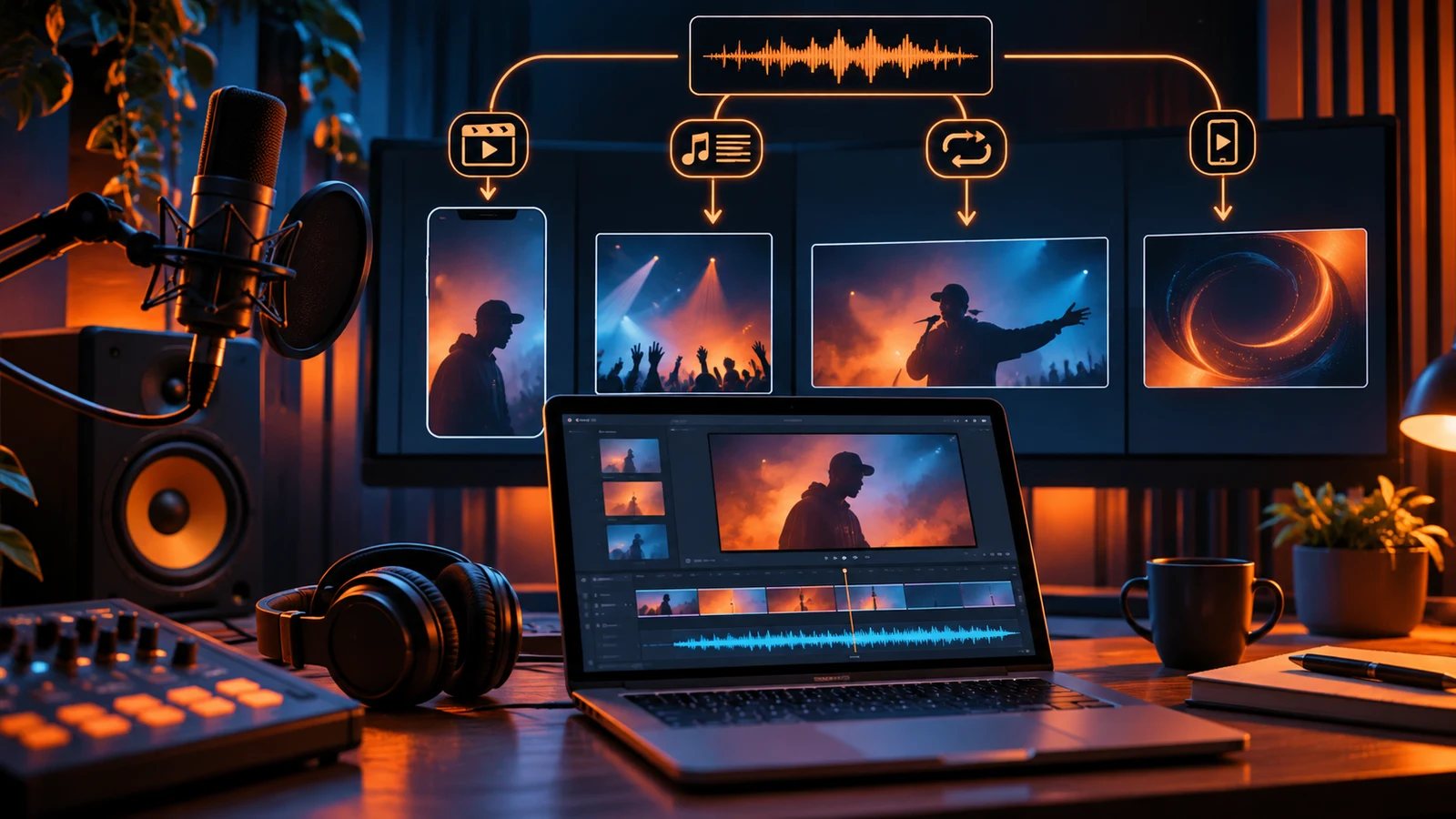
Its software allows musicians to combine audio recordings with video footage, visual effects, and editing styles to produce promotional content.
Unlike traditional video-editing applications, which may require users to manually arrange every clip and transition, Rotor provides automated tools designed around music.
Artists can upload a track, choose footage, select a visual style, and generate a video synchronized with the music.
The platform supports several types of music-related content, including music videos, lyric videos, animated album artwork, Spotify Canvas loops, and Apple Music Album Motion.
The new Artist Unlimited subscriptions allow users to create an unlimited number of eligible assets within their selected plan.
However, unlimited access does not mean every subscription includes every video format.
The available features depend on the tier.
Artist Unlimited was initially introduced in April 2026 as a benefit for MLC members.
The October 29 announcement opened the subscription plans to artists more broadly.
Music Business Worldwide reported the expanded availability on November 6. Music Business Worldwide
Rotor Videos Pricing: How Much Does Artist Unlimited Cost?
Rotor currently offers three Artist Unlimited subscription plans.
All prices are in U.S. dollars, and subscriptions are billed annually.
| Plan | Advertised monthly equivalent | Annual payment | Included formats |
|---|---|---|---|
| Artist Unlimited Streaming | $9.99 | $119.88 | Spotify Canvas and Apple Music Album Motion |
| Artist Unlimited Video | $14.99 | $179.88 | Music videos, lyric videos, album artwork videos, and social formats |
| Artist Unlimited Pro | $19.99 | $239.88 | All formats included in Streaming and Video |
All three plans include access to premium clips and visual styles.
Each subscription is valid for one artist.
This is an important limitation for independent producers, managers, and recording studios working with multiple clients.
An individual artist who releases music frequently may benefit from unlimited exports.
A producer creating promotional videos for several different artists may need a different arrangement.
Rotor also offers pay-as-you-go credits, which can be used across multiple artists.
The company states that its subscriptions renew automatically and that users can cancel through their account settings.
Artists should review the current billing terms before subscribing.
The prices above reflect Rotor's published pricing as of November 9, 2026. Rotor Videos
What Can Artists Create With Rotor Videos?
Rotor's tools are designed to produce several visual formats commonly used during music-release campaigns.
Each serves a different purpose.
Music Videos
Music videos combine a recording with moving images.
Traditional music-video production may involve filming, lighting, locations, performers, and extensive editing.
Rotor offers an alternative for artists who want to create videos using existing footage or licensed clips.
For example, an independent artist could upload a song and select cinematic footage that complements its mood.
The software can then help arrange that footage into a finished video.
This approach may be useful for artists who do not have the budget for a dedicated video shoot.
However, it does not provide the same creative control as directing and filming an original production.
Artists should consider whether stock-based visuals match the identity they want to establish.
Lyric Videos
Lyric videos display a song's lyrics alongside visual elements.
They can be useful for releases where listeners may want to follow the words or understand the song's message.
Rotor offers tools for creating lyric videos without manually animating every line.
However, artists should review the final lyrics carefully.
Automated transcription and synchronization can introduce errors.
Incorrect lyrics may affect the presentation of a song, particularly when names, slang, or unusual phrasing are involved.
Spotify Canvas
Spotify Canvas is a short looping visual associated with a track on Spotify.
Rather than functioning as a conventional music video, Canvas provides a visual element within the listening experience.
Rotor's Artist Unlimited Streaming plan includes tools for creating Spotify Canvas assets.
Artists should still verify the platform's current technical requirements before uploading.
Apple Music Album Motion
Apple Music Album Motion allows eligible releases to feature animated artwork within supported Apple Music experiences.
Rotor provides tools for creating these visual assets.
The availability and display of animated artwork can depend on the relevant delivery process and platform requirements.
Artists should confirm how their distributor handles submission before assuming a completed file will automatically appear on Apple Music.
Social-Media Videos
Rotor's Video and Pro plans support exports in formats suitable for different social platforms.
These include vertical 9:16 and square 1:1 compositions.
For artists promoting releases through Instagram, TikTok, or YouTube Shorts, the ability to adapt content into different aspect ratios can simplify campaign preparation.
However, exporting a video in the correct dimensions does not guarantee engagement or distribution by a platform's recommendation system.
Does Rotor Videos Use AI?
Yes, but the company distinguishes between AI-assisted editing and AI-generated footage.
Rotor says its library contains more than 17 million licensed clips, none of which are AI-generated.
According to the company, the footage consists of licensed material and content created internally.
Rotor uses AI-assisted technology to help edit footage around music.
That includes analyzing a track's rhythm and mood, arranging visual sequences, and synchronizing certain elements.
This is different from generating entirely new video footage from a text prompt.
For example, a generative AI video system might create a fictional performance scene.
Rotor's approach instead involves selecting and editing existing footage.
The distinction may appeal to musicians who want automated editing assistance without relying on synthetic imagery.
However, non-AI-generated footage does not automatically mean that a video is unique.
Different artists may select similar clips from the same library.
The visual identity of a release still depends on the artist's choices.
Rotor's claims about its footage library and editing approach were reported by Music Business Worldwide on November 6. Music Business Worldwide
Who Owns the Videos Created With Rotor?
According to Rotor's published terms and pricing information, artists retain ownership of the videos they create through the platform.
Rotor also states that completed videos can be used commercially and exported without watermarks.
This is an important consideration for musicians who want to use the same visual assets across multiple campaigns.
However, ownership of a finished video should not be confused with ownership of every underlying element.
A video may incorporate licensed stock footage, music, artwork, or other material.
The artist's rights in the finished work remain subject to the applicable licensing terms.
For example, creating a video with licensed footage does not necessarily grant permission to extract and resell the original stock clips.
Likewise, Rotor requires users to own or hold appropriate rights to the music and artwork they upload.
An artist should not assume that access to a video editor grants permission to use someone else's copyrighted song.
The platform's commercial-use permissions apply within the scope of its agreements.
Artists should review the relevant terms before using a video in a project involving third-party rights or unusual commercial applications. Rotor Videos
Is Rotor Videos Cheaper Than Traditional Music-Video Production?
It can be, depending on the type of video an artist needs.
A professionally filmed music video may require a director, camera operator, lighting, editing, locations, and other production expenses.
Rotor provides a different model based on existing footage and automated editing.
For artists who primarily need visualizers, lyric videos, or simple promotional content, a subscription may reduce the cost of producing multiple assets.
However, a subscription-based editor is not a direct substitute for every type of professional production.
An artist who wants a narrative music video featuring actors and custom locations may still need a traditional production team.
Similarly, an artist building a distinctive visual identity may prefer original footage over stock clips.
The more useful comparison is between the artist's actual requirements and the available production options.
Example: An Artist Releasing Six Singles
Consider a hypothetical artist releasing six singles over one year.
The artist wants a music video and a lyric video for each release.
That represents 12 video assets.
Rotor's Artist Unlimited Video plan costs $179.88 annually at the current advertised rate.
If the artist uses the service for all 12 assets, the subscription cost averages approximately $14.99 per asset.
That calculation excludes the artist's time and any additional expenses.
It also assumes the artist is satisfied with the available editing capabilities and visual results.
The example illustrates how frequent releases can change the economics of a subscription.
An artist releasing only one song may find a pay-as-you-go option more appropriate.
What About Artists Who Release Music Infrequently?
Rotor continues to offer credit-based purchases.
These allow artists to create and preview videos without committing to an annual subscription.
Credits are required when downloading completed assets.
Rotor currently lists the following credit packages:
| Credit package | Price |
|---|---|
| 1 credit | $9.99 |
| 5 credits | $44.99 |
| 10 credits | $79.99 |
| 50 credits | $299.99 |
Different video formats require different numbers of credits.
For example, Rotor lists a Spotify Canvas export at one credit, a music video at three credits, and a lyric video at four credits.
The effective cost depends on the package purchased.
A 50-credit package works out to approximately $6 per credit.
However, that lower per-credit cost requires a $299.99 upfront purchase.
For independent musicians with limited budgets, buying more credits than they expect to use may not be economical.
Rotor states that purchased credits do not expire.
Artists should compare the total cost of the assets they actually need rather than selecting a package solely because it offers a lower unit price. Rotor Videos
What This Means for Independent Music Producers
The announcement is relevant not only to recording artists but also to producers who sell beats and production services.
A producer releasing instrumental music may want visual content for YouTube, social media, or streaming profiles.
For example, a producer could create a visualizer for an instrumental release.
They might also produce short promotional clips to introduce a new beat.
However, producers working with multiple clients should pay attention to Rotor's subscription restrictions.
Artist Unlimited plans are intended for a single artist.
A producer managing visual campaigns for several customers should not assume one subscription covers every client.
Rotor's credit packages can be used across multiple artists, according to its published pricing information.
For larger operations, the company offers enterprise arrangements.
This distinction matters for producers who want to incorporate visual content into their services.
Could Producers Offer Visual Packages With Their Beats?
Potentially.
A producer might offer an instrumental alongside a promotional visualizer or other supporting content.
However, that service should be structured carefully.
The producer would need appropriate rights to the music and any footage used.
They would also need to ensure that the relevant video-creation license permits the intended commercial use.
A producer should not assume that selling a beat automatically transfers ownership of a separately created music video.
The deliverables and rights should be addressed in the agreement.
For example, a beat license might cover the instrumental recording, while a separate agreement addresses a promotional video.
Clear terms can help avoid misunderstandings about ownership and permitted uses.
Why Visual Content Matters for Independent Music Releases
A music release can involve several stages.
An artist may begin by selecting an instrumental, recording vocals, and working with engineers to complete the song.
After mastering, the artist prepares distribution, artwork, and promotional materials.
Visual content can help communicate the release's identity.
A lyric video may emphasize the song's message.
A performance video may introduce the artist's personality.
A short-form clip may highlight a memorable section of the recording.
Animated artwork may make a streaming profile more visually distinctive.
However, more content does not automatically mean more listeners.
A release campaign still needs a clear audience and a compelling reason for people to engage.
Artists should evaluate which formats support their goals instead of producing every available asset simply because a tool makes it possible.
How to Build a Visual Release Campaign on a Limited Budget
Independent artists can approach visual promotion as a coordinated project rather than a collection of unrelated posts.
Start With the Music
The recording should be complete enough to support the visual campaign.
Artists should identify the song's strongest moments, emotional direction, and intended audience.
Establish a Consistent Visual Identity
Choose a recognizable visual direction.
This may involve recurring colors, typography, imagery, or performance footage.
Consistency can help connect different promotional assets to the same release.
Create a Primary Video
Depending on the budget, this might be a filmed performance, lyric video, or visualizer.
The primary video can establish the release's overall visual direction.
Prepare Platform-Specific Assets
Adapt the visual concept for streaming platforms and social-media formats.
Different destinations may require different dimensions and durations.
Use Original Footage Where Possible
Even a small amount of original footage can help distinguish an artist from others using similar stock material.
For example, studio footage or a simple performance recording may provide a more personal connection to the artist.
Review Rights and Deliverables
Before publishing, confirm that the music, artwork, and footage are appropriately licensed.
Check the final exports for errors and verify that they meet the requirements of their intended platforms.
Measure Results
Artists should evaluate how visual assets contribute to their broader goals.
Relevant measures may include audience retention, profile visits, saves, or other available engagement indicators.
However, these metrics should not be confused with guaranteed revenue.
A successful campaign depends on more than the number of videos produced.
How Recording Studios Can Use Release Visuals
Recording studios can also participate in an artist's visual development.
A studio may provide a setting for behind-the-scenes footage, recording-session clips, or performance videos.
These materials can help artists document the creation of a song.
However, studios should obtain appropriate permission before publishing client recordings or footage.
A client booking a recording session does not automatically authorize the studio to use the resulting music in advertisements.
Likewise, permission to record a session does not necessarily establish ownership of the artist's performance.
Clear communication can help protect both parties.
Studios interested in offering promotional content as an additional service should define the deliverables, usage rights, and any applicable fees.
Where AudToro Fits Into the Release Process
Creating visual content is one stage of releasing music.
Before an artist reaches that stage, they may need an instrumental, recording services, mixing, or mastering.
These activities often involve collaboration with independent producers and engineers.
AudToro connects artists with music producers and recording services while providing project workflows for creative collaboration.
Its beat marketplace also allows producers to offer original instrumentals.
Artists can use these types of services to develop recordings before preparing distribution and promotional materials.
Tools such as Rotor Videos address a different part of the process: turning finished music into visual content.
Together, professional music services and accessible creative tools can help independent musicians manage more stages of a release.
Neither guarantees audience growth or commercial success.
What Happens Next for Rotor Videos?
The expansion of Artist Unlimited makes the subscription plans available to a broader audience.
The company is positioning the service as a way to simplify visual production for independent musicians.
Several developments will determine its long-term value.
One is whether artists find the available footage sufficiently distinctive.
Another is whether automated editing tools continue improving while preserving creative control.
Pricing will also matter, particularly for musicians who release infrequently.
Finally, the company's approach to licensing and ownership will remain important as artists use generated edits in commercial campaigns.
The broader industry question is whether accessible video-production tools can help musicians create stronger release campaigns without adding unnecessary costs.
The answer will depend on how artists use the technology.
Frequently Asked Questions
What is Rotor Videos Artist Unlimited?
Artist Unlimited is a subscription offering from Rotor Videos that allows musicians to create unlimited eligible visual assets within their selected plan.
When did Artist Unlimited become available to all artists?
Rotor announced the broader availability on October 29, 2026.
The expansion was reported by Music Business Worldwide on November 6.
How much does Rotor Videos cost?
Artist Unlimited plans start at $9.99 per month when billed annually.
The Video plan costs $14.99 per month, and Pro costs $19.99 per month, also billed annually.
Does the $9.99 plan include music videos?
No. The $9.99 Streaming plan focuses on Spotify Canvas and Apple Music Album Motion.
Music videos are included in the Video and Pro plans.
Does Rotor Videos use AI-generated footage?
Rotor says its library of more than 17 million clips contains no AI-generated footage.
The platform uses AI-assisted editing tools.
Can artists use Rotor videos commercially?
Rotor states that completed videos can be used commercially under its applicable terms.
Users must also hold the necessary rights to uploaded music and artwork.
Can producers use one subscription for multiple artists?
Artist Unlimited subscriptions are designed for one artist.
Rotor offers credit packages that can be used across multiple artists.
Does Rotor Videos replace professional music-video production?
Not necessarily.
It provides an alternative for certain types of visual content, but custom filming and professional direction may remain preferable for more complex productions.
Is Rotor Videos worth it for independent artists?
That depends on release frequency, required video formats, budget, and creative preferences.
Artists should compare annual subscription costs with pay-as-you-go credits and other production options.
The Bottom Line
Rotor Videos' expansion of Artist Unlimited reflects the growing importance of visual content in independent music marketing.
By making subscription-based video creation available to all artists, the company is offering another way to produce music videos, lyric videos, streaming animations, and social-media assets.
The service may be particularly useful for musicians who release frequently and need multiple visual formats.
However, artists should evaluate the annual billing commitment, single-artist restriction, and creative limitations before subscribing.
The goal of a release campaign should not be to produce the largest possible number of videos. It should be to create content that helps listeners connect with the music.
For independent artists and producers, affordable editing tools can reduce some production barriers.
But strong recordings, clear creative direction, appropriate licensing, and meaningful audience relationships remain essential.
Verified Sources and Further Reading
Primary company announcement — October 29, 2026
Rotor Videos by LyricFind Launches Artist Unlimited
Official pricing and licensing information
Rotor Videos — Pricing, Plans, Ownership and Licensing FAQ
Independent industry reporting — November 6, 2026
Music Business Worldwide — Rotor Videos Opens Artist Unlimited to Any Artist
Additional reporting — November 7, 2026
Music Industry Weekly — Rotor Videos Launches $9.99 Self-Serve Plan