

Platform Updates
From Beat to Studio: How AudToro Is Building a Better Way to Create Music
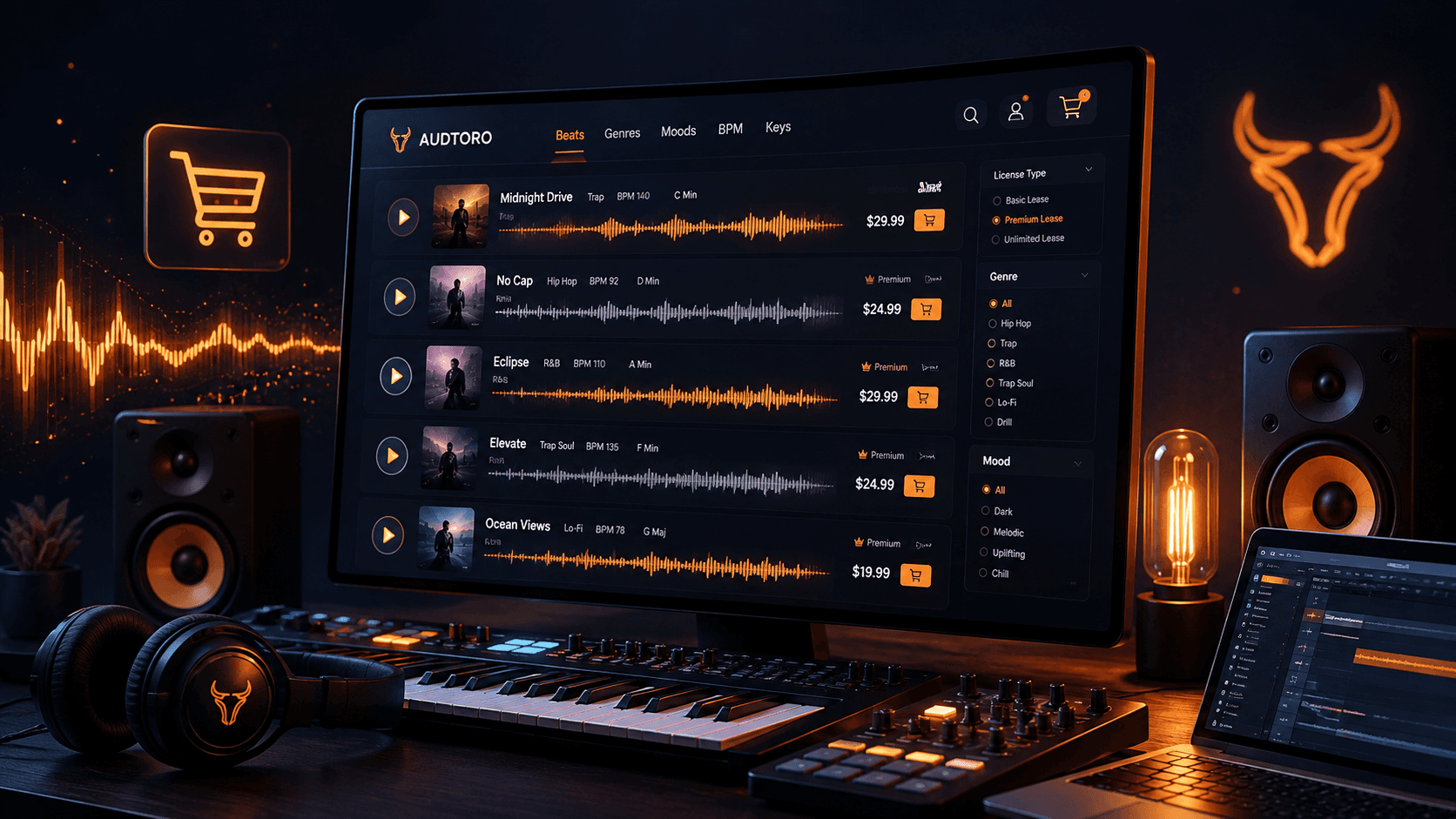
AudToro is building a beat marketplace that helps artists discover beats, find their sound, connect with producers, and book studio sessions to record—all in one place.
AudToro Team · Aug 20, 2026 · 21 min read
Finding the right beat is often where a song begins.
An artist hears an instrumental and immediately starts imagining the hook, the flow, the melody, or the story they want to tell.
That moment can turn into a complete song.
But for many independent artists, everything that happens after finding the beat becomes complicated.
The beat may come from one website.
The producer may be contacted through Instagram.
The beat license may be stored in an email.
The recording studio may be booked through a text message.
The engineer may ask for the beat through another app.
The mix may be handled by someone else entirely.
By the time the song is finished, the artist may have used five or six different platforms just to create one record.
AudToro is being built to make that process more connected.
With the upcoming AudToro beat marketplace, artists will be able to discover beats, explore producers, find the sound that fits their music, and then continue directly into the next stage of the creative process.
That could mean booking a studio session to record over the beat.
It could mean hiring a producer for remote work.
It could mean starting a project for mixing, editing, or additional production.
Instead of treating buying a beat and recording a song as completely separate experiences, AudToro is working toward connecting the entire process.
Find the beat. Find the producer. Book the session. Build the song.
All through one music-focused marketplace.
The Beat Is Often the Beginning of the Song
For many artists, songwriting starts with production.
You may already have lyrics written, but the right instrumental can completely change how those lyrics are delivered.
Or you may have nothing written yet.
You hear a beat and immediately know:
- Where the hook should go
- How the verse should flow
- What emotion the song should have
- Whether the vocals should be aggressive or melodic
- How fast or slow the performance should feel
- What kind of record you want to make
The right beat gives the song direction.
That is why beat discovery is such an important part of independent music creation.
Artists need a way to explore production that matches:
- Genre
- Mood
- Energy
- Tempo
- Style
- Creative direction
- Vocal approach
The AudToro beat marketplace is being built to give artists another way to discover that starting point.
But AudToro's goal goes beyond helping an artist purchase an instrumental.
The bigger opportunity is helping the artist turn that instrumental into an actual record.
The Problem With the Current Beat-to-Song Workflow
Independent music creation is often fragmented.
Imagine an artist discovers a beat online.
They purchase the license.
Now they need somewhere to record.
They search:
recording studio near me
Then they open several studio websites.
They check Instagram pages.
They message producers.
They ask for pricing.
They wait for responses.
They eventually find someone and send the beat.
After recording, they discover that mixing was not included.
Now they need another engineer.
They upload the files somewhere else.
Then they need mastering.
Then they need to find the beat license again when preparing for release.
None of these steps are necessarily difficult by themselves.
The problem is that they are disconnected.
The artist constantly has to figure out:
What do I do next?
AudToro is being built around a different question:
What if the next step was already there?
A Beat Marketplace Connected to Music Services
The upcoming AudToro beat marketplace is being designed as part of the larger AudToro ecosystem.
That means the beat is not the end of the transaction.
It can become the beginning of the project.
An artist may be able to move through a workflow such as:
- Discover a beat
- Listen to the instrumental
- Review the producer
- Choose the appropriate license
- Purchase the beat
- Find a producer or studio
- Book recording time
- Bring the beat into the session
- Record the song
- Continue the project through mixing or other services
That creates a much more natural experience.
Instead of telling the artist:
Here is your beat. Good luck figuring out everything else.
The platform can help guide them toward the next stage of creating the song.
Step 1: Discover a Beat That Fits Your Sound
Every artist has a different sound.
Some artists want:
- Dark trap production
- Melodic hip-hop
- Smooth R&B
- Aggressive drill
- Southern rap
- Pop production
- Alternative music
- Country
- Rock
- Soul
- Gospel
- Electronic production
A good beat marketplace should make it easier to explore production based on what the artist is actually trying to create.
Artists should be able to listen first.
The beat needs to inspire something.
You should be able to hear the instrumental and ask:
- Can I hear myself on this?
- Does this fit my voice?
- Does this match my current sound?
- Does it give me a hook idea?
- Could this become my next release?
- Does this producer understand the style I want?
Beat discovery should not feel like browsing random audio files.
It should feel like finding the foundation for the next song.
Step 2: Learn More About the Producer Behind the Beat
The producer matters too.
The artist may find a beat they like and then realize that the producer offers other services.
That producer may also offer:
- Custom beats
- Song production
- Mixing
- Mastering
- Recording
- Vocal editing
- Arrangement
- Remote production
That creates an opportunity for a deeper creative relationship.
Instead of treating the producer as only the person who uploaded the instrumental, the artist can learn more about:
- Their style
- Their genres
- Their other work
- Their production services
- Their location
- Their remote availability
- Their creative approach
A beat may be the first interaction between an artist and producer.
It does not have to be the last.
Step 3: Understand the Beat License
Finding the beat is only part of the decision.
Artists also need to understand what they are purchasing.
Beat licenses can vary.
Depending on the producer and offer, options may include:
- MP3 lease
- WAV lease
- Premium license
- Trackout or stem license
- Unlimited license
- Exclusive rights
- Custom licensing
The exact names and terms can vary between producers.
Before purchasing a beat, artists should understand:
- Which audio files are included
- Whether the beat can be released commercially
- Whether there are usage limits
- Whether stems or trackouts are included
- Whether the license is exclusive or non-exclusive
- Whether producer credit is required
- Whether royalties or publishing terms apply
- Whether the producer can continue licensing the beat
The license should answer the artist's most important question:
What am I allowed to do with this beat?
Artists should always review the actual license terms before releasing music.
Step 4: Purchase the Beat
Once the artist finds the right beat and understands the licensing option, they can purchase the appropriate license.
This should give the artist access to the files included with that license.
Depending on the license, that might include:
- MP3
- WAV
- Trackouts
- Stems
- Other included production files
The important part is that the artist now has the production needed to move forward.
But that is where many beat platforms stop.
AudToro can take the experience further.
Step 5: Book Studio Time for the Beat
After purchasing the instrumental, the next logical question is:
Where am I going to record this?
AudToro already focuses on connecting artists with producers and music services.
That means an artist who finds a beat can also search for someone who can help record the song.
The artist may look for:
- Recording producers
- Vocal engineers
- Studio sessions
- Producers specializing in their genre
- Nearby studio services
Instead of opening another search engine and starting over, the artist can continue exploring the AudToro marketplace.
For example:
An artist finds a melodic rap beat.
They purchase it.
Then they search for a producer offering vocal-recording sessions nearby.
They review profiles.
They compare services.
They find someone whose previous vocal work fits the song.
They book a two-hour session.
Now the idea is becoming a real project.
Why This Matters for Independent Artists
Independent artists often have to act as their own:
- A&R
- Project manager
- Booking manager
- Producer scout
- Studio coordinator
- File manager
- Release planner
That is a lot to manage.
A connected marketplace can make the creative process easier by putting more of those decisions in one environment.
Instead of constantly asking:
Where do I find this?
the artist can focus more on:
What should I create?
That difference matters.
The easier the infrastructure becomes, the more energy artists can put into the music itself.
Step 6: Prepare for the Recording Session
Once the studio session is booked, the artist should prepare.
Purchasing the beat does not mean the song is ready to record.
Before the session, prepare:
- Finished lyrics
- Song structure
- Beat file
- Beat license
- Reference tracks
- Hook ideas
- Vocal arrangement
- Ad-lib ideas
- Backup files
- Clear session goals
Know what you want to accomplish.
For example:
I want to record the lead vocals, hook doubles, and ad-libs during this two-hour session.
That is much better than arriving without a plan.
Preparation helps the artist get more value from the booked studio time.
Step 7: Record the Song
Now the beat becomes something completely different.
The instrumental that started as an online preview becomes the foundation of the artist's record.
During the studio session, the producer or engineer may help with:
- Microphone setup
- Recording levels
- Vocal takes
- Punch-ins
- Vocal comping
- Doubles
- Harmonies
- Ad-libs
- Basic editing
- Performance direction
- Rough mix
The exact services depend on the booking.
Artists should confirm what the recording session includes before arriving.
Studio time does not always include:
- Full mixing
- Mastering
- Vocal tuning
- Unlimited editing
- Final stems
Those may be separate services.
The goal is clarity.
Step 8: Continue the Song Through the AudToro Workflow
Recording may not be the end of the project.
After the session, the artist may still need:
- Vocal editing
- Mixing
- Mastering
- Arrangement changes
- Additional production
- A clean version
- A performance version
- Stems
This is where the broader AudToro workflow becomes valuable.
The artist can continue using producer services instead of rebuilding the project somewhere else.
For example:
Beat purchase
↓
Studio recording
↓
Mixing
↓
Mastering
↓
Final song
The services do not necessarily need to come from the same producer.
An artist could:
- Buy a beat from one producer
- Record with a local producer
- Hire another producer to mix remotely
Or:
- Buy a beat
- Work with the same producer for custom changes
- Record locally
- Return to the original producer for mixing
The artist has flexibility.
One Marketplace, Multiple Stages of Music Creation
AudToro's long-term opportunity is not simply becoming another website where people buy beats.
The bigger opportunity is connecting multiple stages of independent music creation.
An artist may eventually use AudToro for:
Discovery
Find producers and beats.
Production
Purchase or commission production.
Recording
Book studio sessions.
Collaboration
Work with producers locally or remotely.
Project Management
Share music files and project information.
Review
Receive drafts and request included revisions.
Completion
Approve final deliverables.
That makes AudToro more than a directory.
It creates an environment centered around actually making music.
Helping Artists Discover Their Sound
Finding your sound is rarely something that happens instantly.
Artists experiment.
They may try:
- Different producers
- Different genres
- Different vocal styles
- Different tempos
- Different drum patterns
- Different arrangements
- Different recording techniques
A beat marketplace can become a discovery tool.
An artist may think they only make trap music and then hear an alternative R&B instrumental that changes their direction.
A singer may discover a producer whose sound inspires a completely different style.
A rapper may find a country-influenced beat that creates an unexpected record.
Creative discovery often starts with hearing something new.
Giving artists access to more production can help them better understand:
- What fits their voice
- Which tempos feel natural
- Which genres inspire them
- What kind of producer they work well with
- What type of sound they want to develop
The beat becomes part of artist development.
Helping Producers Reach More Artists
The beat marketplace also creates new opportunities for producers.
A producer may already offer:
- Studio sessions
- Mixing
- Mastering
- Remote production
Adding beats creates another way for artists to discover their work.
An artist may discover the producer because of a beat and later book:
- A recording session
- A custom beat
- A mix
- A full production project
That means the beat marketplace can become a client-acquisition channel.
Instead of simply earning from the license, the producer may build a longer relationship with the artist.
The journey could look like:
Artist discovers beat
↓
Artist purchases beat
↓
Artist visits producer profile
↓
Artist books another service
↓
Artist returns for future songs
That is much more valuable than treating every transaction as completely separate.
Beats Can Become the Front Door to Producer Profiles
Many artists are hesitant to hire a producer they have never heard.
A beat changes that.
The artist has already experienced part of the producer's creativity.
They know:
- What the drums sound like
- How the producer arranges music
- What melodies they use
- Which genre they understand
- Whether their style feels compatible
That gives the artist a reason to explore the producer further.
A producer profile can then introduce additional services.
For example:
You liked this beat?
The producer also offers:
- Custom production
- Remote mixing
- Recording sessions
- Full-song packages
Beat discovery becomes producer discovery.
Helping Local Producers Gain More Visibility
Local producers face a major problem:
Artists may live nearby and still not know they exist.
A producer could have:
- A studio
- Strong beats
- Recording ability
- Mixing skills
- Open availability
but still struggle to get clients.
Adding beat discovery creates another entry point.
An artist may discover a producer's beat and then realize:
This producer is only fifteen minutes away.
Now the artist has several options.
They may:
- Purchase the beat
- Book the producer's studio
- Ask for a custom version
- Hire the producer to record the song
- Continue the entire project with the same person
That creates a natural connection between online discovery and local music creation.
Connecting Beat Discovery With Studio Discovery
Imagine an artist using AudToro in Birmingham.
They browse beats.
They find a dark melodic instrumental that fits their voice.
They purchase the appropriate license.
Then they search AudToro for producers offering studio sessions in Birmingham.
They find a producer who specializes in melodic rap and R&B.
They review:
- Audio examples
- Services
- Pricing
- Studio information
- Availability
They book a session.
The beat and the studio no longer exist in two unrelated ecosystems.
They are part of the same creative journey.
That is the type of workflow AudToro can help create.
Local and Remote Work Can Exist Together
An artist does not have to choose between local and remote production.
They can combine both.
Example workflow:
- Purchase a beat from a producer in Atlanta.
- Book a studio session with a producer in Huntsville.
- Record the vocals locally.
- Send the project to a remote engineer for mixing.
- Receive the final master.
- Complete the project.
Another workflow:
- Discover a local producer's beat.
- Purchase the license.
- Book the same producer's studio.
- Record together.
- Continue mixing through the project workspace.
- Approve the final song.
Artists should be able to choose whichever workflow fits the project.
Why Organized Files Matter
Once the beat becomes part of a project, file organization becomes important.
The artist may need:
- Beat MP3
- Beat WAV
- Trackouts
- License
- Lead vocals
- Doubles
- Harmonies
- Ad-libs
- Rough mix
- Final mix
- Master
Clear file organization prevents mistakes.
Useful file names include:
SongTitle_Beat.wavSongTitle_LeadVocal.wavSongTitle_HookDouble.wavSongTitle_Adlibs.wavSongTitle_MixV1.wavSongTitle_FinalMaster.wav
Avoid:
- Beat1.wav
- New vocal.wav
- Final.wav
- Final final.wav
- Real final.wav
An organized music project becomes easier to continue between different professionals.
Beat Licensing Still Matters
A connected marketplace does not remove the need for licensing.
Artists still need to understand the rights associated with the beat they purchase.
Before releasing a song, review:
- License type
- Commercial-use rights
- Distribution limitations
- Streaming limitations if applicable
- Trackout rights
- Producer credit
- Publishing terms
- Ownership
- Exclusive or non-exclusive status
Different producers may offer different licenses.
Artists should never assume that purchasing a beat means they automatically own the underlying composition outright.
The actual agreement controls the rights.
Artists Should Keep Their Beat License
After purchasing a beat, keep a copy of the license.
Do not lose it.
Store it with the project.
A useful project folder might contain:
Song Title
- Beat
- Beat License
- Vocals
- Mixes
- Masters
- Artwork
- Release Information
The beat license may become important when:
- Distributing the song
- Resolving a content claim
- Reviewing usage rights
- Working with a label
- Transferring project information
- Confirming producer credit
Treat licensing documents as part of the music project.
What Artists Should Look for Before Buying a Beat
Before purchasing, ask:
- Does the beat fit my voice?
- Is the producer legitimate?
- Can I hear myself creating a complete song?
- What license am I buying?
- Is the beat exclusive?
- Which files are included?
- Are trackouts included?
- What usage rights do I receive?
- Does the producer require credit?
- Are publishing terms involved?
- Can I release commercially?
- Does the producer offer custom production?
- Can I book additional services?
The cheapest beat is not automatically the best beat.
Choose production that helps move the song forward.
What Beat Makers Should Provide
Producers selling beats should make the offer clear.
A strong beat listing should include:
- Beat title
- Genre
- Mood
- BPM
- Key when appropriate
- Audio preview
- Producer name
- License options
- Included file formats
- Pricing
- Usage terms
- Producer-credit requirements
- Trackout availability
- Exclusive availability
- Relevant service options
Clarity creates better buyers.
If artists understand the license before purchasing, there is less chance of confusion later.
The Opportunity for Custom Production
Sometimes an artist finds a beat that is almost perfect.
They might love:
- The melody
- The drums
- The mood
but want:
- A longer hook
- Different drums
- Another bridge
- A key change
- A slightly different arrangement
- A custom version inspired by the beat
If the producer offers custom production, the artist may be able to hire them for a more personalized project.
That turns beat discovery into creative collaboration.
Instead of trying to force the song onto an instrumental that is not quite right, the artist can work with the producer to shape the production.
From Beat Buyer to Long-Term Client
The best artist-producer relationships often start with one song.
An artist may initially purchase one beat.
If the collaboration works, the artist may return for:
- Another beat
- Custom production
- Mixing
- Studio recording
- An EP
- An album
- Ongoing production
For producers, this means the beat store is not only a digital-sales opportunity.
It can become a relationship-building tool.
The goal should not always be:
Sell one beat.
It can be:
Find the right artist for my sound and build something together.
That is where a marketplace becomes more powerful.
How the Beat Store Fits the Bigger AudToro Vision
AudToro's broader purpose is to help independent music creators connect and complete music work.
The beat store expands that workflow by adding another major starting point.
An artist might enter AudToro because they need:
- A beat
- A producer
- Studio time
- Mixing
- Remote production
All of those needs can eventually lead into the same ecosystem.
That means AudToro can help connect:
Beat Discovery
↓
Producer Discovery
↓
Studio Booking
↓
Recording
↓
Remote Collaboration
↓
Mixing and Mastering
↓
Finished Song
Instead of creating separate destinations for every stage, AudToro can become a central place where the project grows.
Why This Is Different From a Beat-Only Marketplace
A beat-only marketplace can be extremely useful for finding instrumentals.
But once the artist downloads the beat, they may still need to find:
- A producer
- A recording engineer
- Studio time
- A mixing engineer
- A mastering engineer
AudToro's advantage is the connection between the beat and the services that come next.
The goal is not simply:
Buy beats here.
It is:
Start making your song here.
That creates a much broader value proposition.
Why This Is Different From a Studio Directory
A studio directory may help an artist find somewhere to record.
But the artist may still need to find the production first.
AudToro connects both sides of the problem.
An artist can potentially:
- Find the sound.
- Secure the beat.
- Find the studio.
- Record the song.
- Continue the project.
The marketplace becomes centered around creation rather than only listings.
Why This Matters for Emerging Artists
New artists often do not know the full music-production process.
They may know:
I want to make a song.
But they may not know whether they need:
- A beat
- A recording engineer
- A producer
- Mixing
- Mastering
- Trackouts
- Stems
- A WAV file
A connected platform can make the process easier to understand.
The artist can move naturally from one stage to another.
Find the beat.
Then record.
Then finish the song.
Instead of expecting every artist to understand the entire industry before they start, the platform can help guide the process.
A Possible AudToro Beat-to-Song Workflow
An artist's journey could look like this:
1. Browse beats
Explore production based on genre, mood, style, or producer.
2. Preview the beat
Listen and decide whether it fits the song.
3. Review the producer
Explore the producer's profile and additional services.
4. Select the license
Choose the license appropriate for the project.
5. Purchase
Receive the included beat files and license.
6. Continue creating
Choose a next step such as:
- Find a studio
- Book a producer
- Request custom production
- Start a remote project
7. Record
Use the beat during the booked studio session.
8. Manage the project
Keep the relevant music files connected to the work.
9. Mix and master
Hire the appropriate producer or engineer if those services are still needed.
10. Finish the song
Receive the final deliverables and prepare for release.
That is the larger vision.
Beat-to-Studio Checklist for Artists
Before purchasing the beat:
- Listen carefully
- Review the producer
- Check BPM and key if available
- Read the license
- Confirm included files
- Understand credit requirements
- Understand ownership terms
Before booking the studio:
- Finish your lyrics
- Practice the song
- Download the correct beat
- Keep the license
- Confirm session length
- Confirm what the studio includes
- Ask whether mixing is included
- Bring reference tracks
- Back up your files
After recording:
- Confirm which vocal files you receive
- Decide whether the song needs editing
- Decide whether the song needs mixing
- Decide whether mastering is needed
- Keep all files organized
- Keep the license with the project
- Continue working through the appropriate AudToro service
How AudToro Helps Beat Makers
For beat makers, the new marketplace can provide another way to:
- Showcase production
- Reach independent artists
- Offer different licenses
- Sell beats
- Promote custom production
- Connect beat buyers to producer profiles
- Offer remote services
- Build repeat clients
- Turn beat discovery into larger music projects
A producer who only sells beats can use the marketplace as a storefront.
A full-service producer can use the beat store as the first step toward a larger client relationship.
Both models can work.
How AudToro Helps Artists
For artists, the beat marketplace can help bring several parts of music creation together.
Artists can:
- Discover beats
- Explore producer styles
- Choose production that fits their sound
- Review available licenses
- Purchase the appropriate beat
- Find local producers
- Book studio sessions
- Start remote projects
- Continue into mixing or mastering
- Keep the creative workflow connected
The artist does not have to leave the ecosystem every time the song reaches a new stage.
That is the bigger idea behind the feature.
Final Thoughts
Finding the right beat can change an entire song.
But finding the beat is only the beginning.
The artist still needs to turn that production into a record.
That may require a studio.
It may require a producer.
It may require recording, editing, mixing, mastering, or additional creative work.
AudToro's upcoming beat marketplace is being built to connect those stages.
Instead of simply giving artists another place to buy instrumentals, AudToro can help create a path from inspiration to execution:
Find the beat.
Find your sound.
Book the session.
Record the song.
Finish the project.
For producers, that creates more ways to be discovered and more opportunities to turn beat buyers into long-term clients.
For artists, it creates a simpler way to move from hearing an instrumental to creating a finished record.
AudToro is working toward becoming more than a place where artists and producers meet.
It is becoming a place where music gets made.
Find your sound. Build your song. Create with AudToro.
FAQ
Is AudToro building a beat marketplace?
Yes. AudToro is building a beat marketplace designed to help artists discover production and connect beat discovery with the broader artist-producer workflow.
What can artists do after finding a beat on AudToro?
The goal is for artists to be able to continue from beat discovery into other music services, such as finding producers, booking studio sessions, starting remote projects, mixing, or mastering.
Can I book studio time after purchasing a beat?
AudToro is designed around producer and studio-service discovery, allowing artists to move from finding production toward booking the recording services needed to turn the beat into a complete song.
Why is finding the right beat important?
The beat establishes much of the song's tempo, energy, mood, and creative direction. The right production can inspire lyrics, melodies, vocal delivery, and song structure.
Does buying a beat mean I own it completely?
Not necessarily. Beat ownership and usage depend on the license purchased. Artists should review the specific license terms, usage rights, producer-credit requirements, publishing provisions, and exclusivity before releasing music.
What is the difference between a beat lease and an exclusive beat?
A non-exclusive license generally allows the producer to continue licensing the instrumental to other artists under the applicable terms. An exclusive arrangement generally provides broader or exclusive rights, but the exact rights depend on the written license.
Are mixing and mastering included when I buy a beat?
Not automatically. A beat purchase generally covers the production and the rights described in the selected license. Recording, vocal editing, mixing, mastering, and studio time may be separate services.
Can I work with the producer who made the beat?
If the producer offers additional services, an artist may be able to explore their profile and hire them for services such as custom production, remote work, mixing, or recording.
Can artists use one producer for the beat and another for recording?
Yes. An artist may purchase a beat from one producer and book a different local producer or engineer for the recording session.
Can I record locally and have the song mixed remotely?
Yes. Artists can use a hybrid workflow by recording locally and hiring a remote producer or engineer for mixing, mastering, editing, or additional production.
What should I bring to the studio after buying a beat?
Bring the highest-quality beat file available under your license, finished lyrics, reference tracks, a copy of the license, backup files, and a clear goal for the recording session.
What should beat makers include in their listings?
Beat makers should clearly list the beat title, producer name, genre, mood, BPM, key when appropriate, audio preview, pricing, license options, included files, usage terms, and any additional production services.
How does the beat marketplace help producers?
It gives producers another way to showcase their production, sell licenses, reach artists, promote custom production, and potentially turn beat buyers into longer-term clients.
How does the beat store fit AudToro's overall mission?
The beat marketplace expands AudToro from helping artists find producers and music services into helping artists begin the creative process itself. The goal is to connect beat discovery, producer discovery, studio booking, remote collaboration, and project completion through one music-focused marketplace.